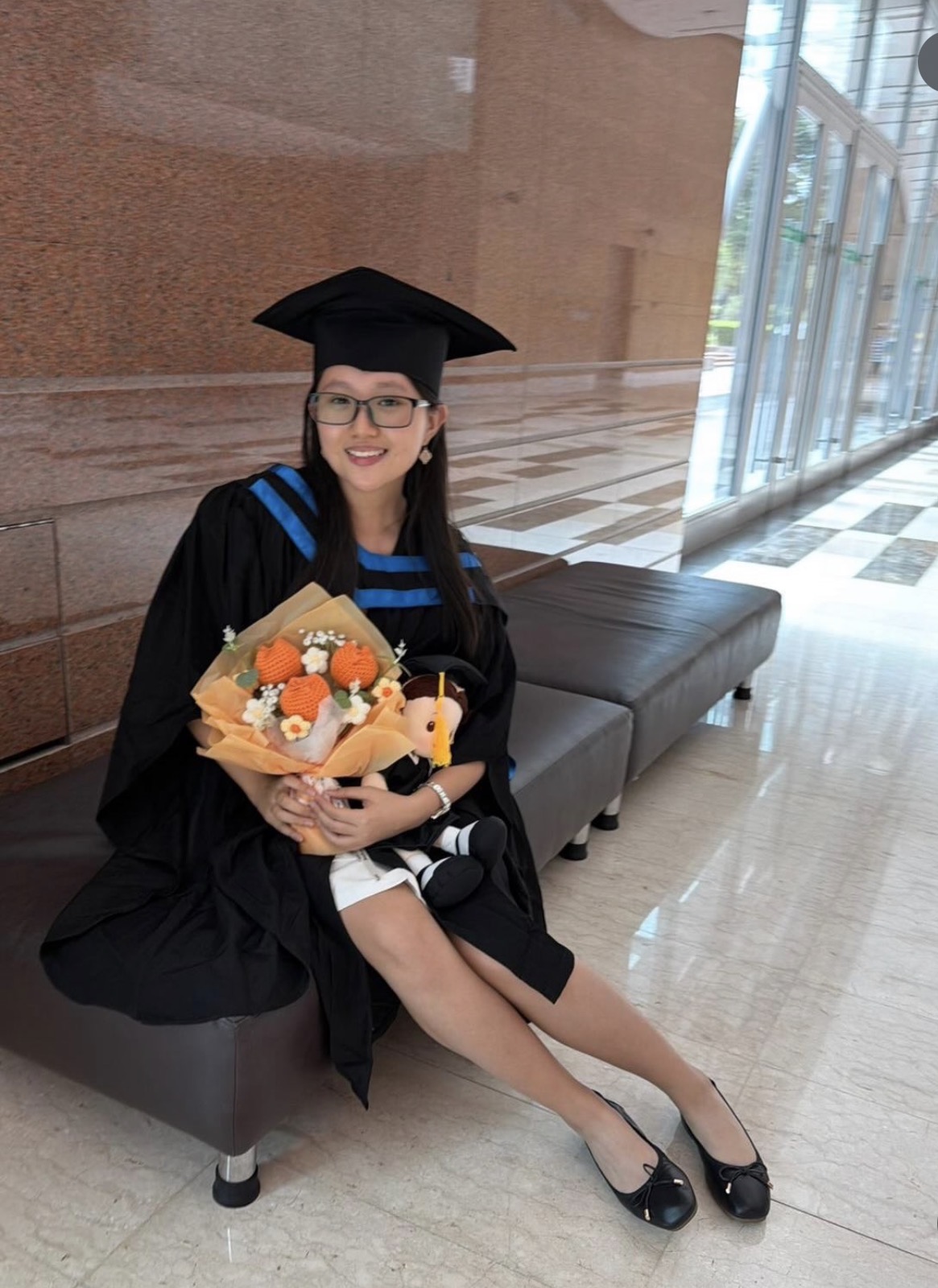
Cadence Sng
Cadence became the youngest person in the world to achieve the London College of Music Licentiate Diploma in Music Theatre .
LCM LICENTIATE DIPLOMA
Sometimes the goal is the next examination. Sometimes it is the beginning of a much longer journey. Over the years, Vocalogy students have taken their training into some extraordinary places.
They are not promises of what every Vocalogy student will achieve. They demonstrate what can become possible when ability, ambition, appropriate training and sustained work come together.
An excellent result doesn't have to mean Berklee or the West End. For one student, it may be a distinction. For another, getting into the school musical. For another, finally performing a piece they once thought was beyond them.
Cadence became the youngest person in the world to achieve the London College of Music Licentiate Diploma in Music Theatre .
LCM LICENTIATE DIPLOMA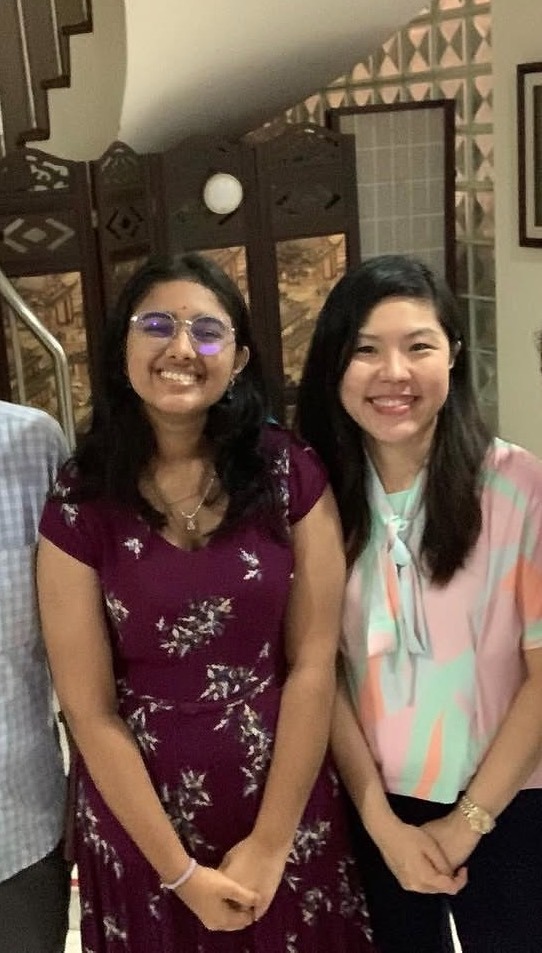
Shravana began studying with Vocalogy as a child. Years later, she achieved a childhood dream: admission to the prestigious Vocal Performance programme at Berklee College of Music .
BERKLEE COLLEGE OF MUSIC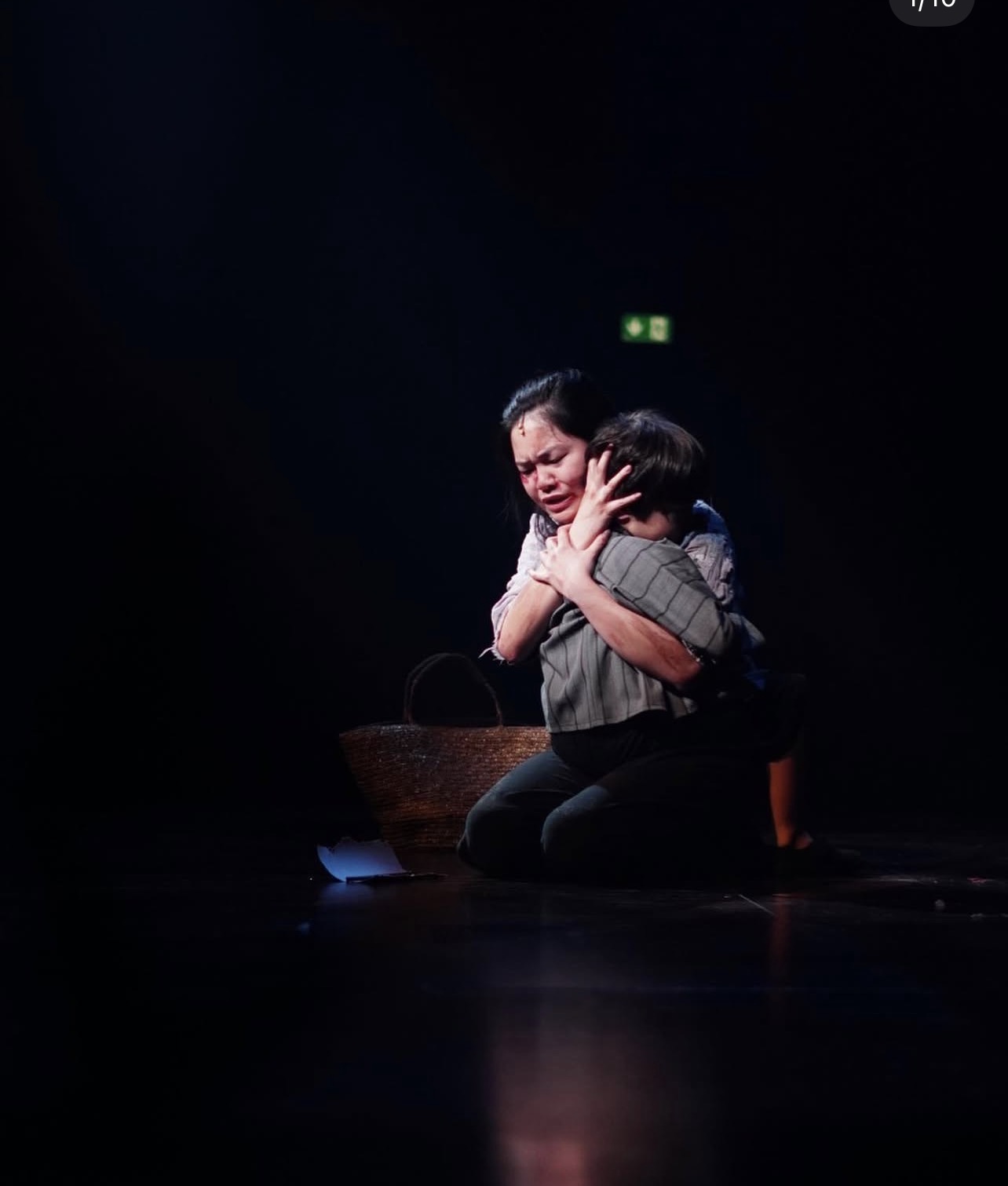
Rachel, a Vocalogy musical-theatre student and London College of Music Music Theatre diploma holder, went on to understudy the lead role of Kim in Miss Saigon at the Raimund Theatre in Vienna .
She subsequently joined My Neighbour Totoro in London's West End .
MUSICAL THEATREGrace’s holistic approach to vocal training has given me more than just the ability to sing; it has deepened my understanding of the mind-body connection and informed my personal growth. She draws on a diverse array of methods and techniques, tailoring each session to suit specific needs. In a short time, she helped me progress from having no singing experience to achieving a Grade 8 in Musical Theatre.
Teacher Grace was my voice teacher from when I was 8 to 18, and in that time she developed my singing so much and without her, I wouldn’t be where I am now. I’m now studying at Berklee College of Music as a vocal performance major. She laid the foundation for my singing and gave me numerous performance opportunities, pushing me to success through competitions and singing exams.
Perhaps there is an examination coming up. An audition. A competition. A performance. A place in a school production. Or a much bigger ambition that has been taking shape for years.
When you know what you want to achieve, voice lessons should help you get there. At Vocalogy, we begin with the goal—and work backward.
What does this particular singer need to be able to do? What will be expected of them? What skills do they already have? What still needs to develop?
Because getting a result requires more than being able to sing something well in a lesson. You have to be able to do it when it counts.
There is no standard Vocalogy program that every student works through in exactly the same way. An examination candidate has different requirements from someone preparing for a professional musical theatre audition. A competition requires different strategic thinking from a school performance.
And a student hoping eventually to study music professionally needs development that extends far beyond the next examination.
So we teach towards the goal. Students come to Vocalogy to prepare for:
Before deciding what to teach, we need to understand the voice in front of us. We look at what the student can already do, where difficulties are occurring and what their particular goal will demand of them.
From there, we identify what actually needs attention. Sometimes there is a technical problem that requires focused work. Sometimes the student already has much of the required ability and needs better repertoire, interpretation or performance preparation.
Technique matters. But few people started singing because they dreamed of doing vocal exercises. Our students have told us that too.
So while we use technical work when it is needed, we try wherever possible to move the learning into repertoire.
That doesn't mean avoiding technical work. It means using it purposefully — and moving into application as soon as it is useful to do so.
The song becomes somewhere to develop and apply the coordination, rather than a reward for finishing the exercises.
Vocalogy students prepare for examinations with ABRSM and the London College of Music.
The aim is not simply to get through an examination. We want the level of the student's singing to grow with the level of the qualification.
Repertoire, technical development, interpretation and performance preparation are therefore considered together.
An audition has a very specific purpose. The performer needs to show the people in the room what they need to see and hear.
For school and professional musical-theatre auditions, preparation is therefore shaped around the actual opportunity.
We don't prepare for an abstract idea of being “good.” We prepare for the audition in front of us.
Competition preparation begins before we choose the songs. First, we understand the competition.
Competition strategy isn't simply about choosing the most difficult song. It is about making intelligent choices about what to sing, why to sing it and how to present the performer at their best.
A student can be completely prepared in the lesson room and discover something very different when an audience appears.
Every few months, students have the opportunity to perform a programme of approximately ten minutes in front of a carefully supported audience. There are no marks, prizes or rankings.
What we learn comes straight back into the lesson room. We can make adjustments before the examination, audition, competition or important performance.
Discover Performance PracticeWanting excellent results does not mean pursuing them at any cost. There are things we will not compromise to get a certificate, win a competition or impress an audience.
We will not push a voice simply because a particular sound seems impressive.
And we will not give children repertoire whose emotional or developmental content we believe is inappropriate for their age simply because it is a popular competition or examination choice.
Sometimes good teaching means saying: Not yet.The goal is not merely to produce the result in front of us. It is to develop a singer who can continue growing after that result has passed.
Progress is rarely perfectly linear. A student may understand something immediately and need months to develop something else.
One repertoire choice may reveal an ability that another piece concealed. Confidence may grow faster than technique—or technique faster than confidence.
That is why individual attention matters. Grace works with the student in front of her rather than requiring the student to fit a predetermined program.
At Vocalogy, the goal matters — and so does the person pursuing it.
Teacher Grace caters her lessons to the learning needs of my boy. She has been patient and tried various ways in search of the optimal method to bring out the best and strengths of my boy. Provides good guidance for exams too.
Results don't always happen on the same timetable. Some students come to Vocalogy with a clear goal and progress quickly. Others grow with us over many years, with each stage creating the foundation for the next.
“Grace’s holistic vocal training gave me more than technique—it deepened my mind-body awareness. In just a short time, she helped me progress from no singing experience to Grade 8 in Musical Theatre.”Andrew Ng
“From age 8 to 18, Grace laid the foundation for my vocal journey. Thanks to her, I’m now studying at Berklee. Her nurturing approach blends technique and well-being—each class left me more confident, connected, and motivated.”Shravana Karthikeyan
What they share is an approach that takes the result seriously while paying attention to the person working towards it.
You don't need to decide how many sessions you need before you contact us. Start with the goal. Tell us what you — or your child — are working towards, where you are now and what you would like to achieve.
Grace will recommend the most appropriate way forward based on the goal, the student's current needs and the time available to prepare.