
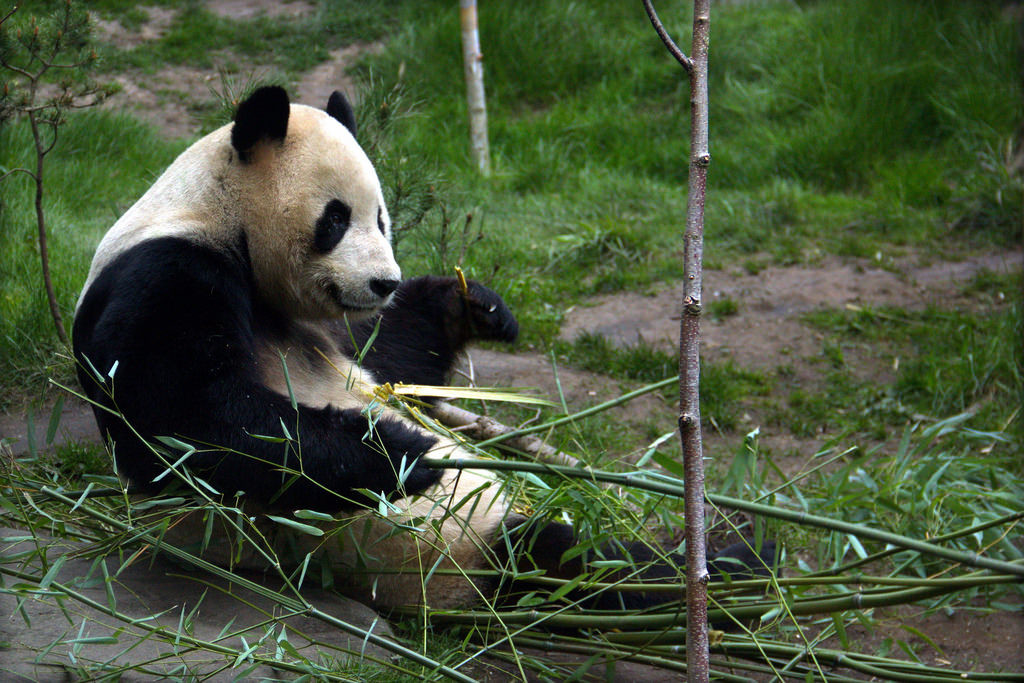
I didn’t expect Kung Fu Panda to teach me much about voice teaching.
The film tells the story of Po, an unlikely martial arts hero who seems, at first, to be everything a great warrior should not be: awkward, inexperienced, physically untrained and completely out of place among the accomplished martial artists around him.
And yet, Po becomes the Dragon Warrior.
What interests me most about the story is not the martial arts. It is what happens when a teacher encounters a student who does not fit the expected mould.
That happens in voice teaching too.
Sometimes a student arrives with little confidence. Sometimes they have been told they cannot sing. Sometimes their voice seems resistant to everything we try. Sometimes they return to the same class repeatedly, still struggling with something that appears, from the outside, to be simple.
As teachers, these students can challenge us.
They can also teach us.
Here are three lessons Kung Fu Panda has given me about teaching voice.
-
Table of Contents
ToggleThere are no Accidents:
-
One of the recurring ideas in Kung Fu Panda is the belief that things do not necessarily happen by accident.
I have thought about this often as a teacher.
There are times when we encounter a student and wonder:
Why is this person in my class?
Perhaps they seem completely unsuited to singing. Perhaps they struggle with skills that others acquire easily. Perhaps they take the same module again and again. Perhaps progress is frustratingly slow.
It is tempting to see the student as a problem to be solved.
But what if we looked at the situation differently?
Perhaps there is something for the student to learn.
And perhaps there is something for the teacher to learn as well.
A difficult student can reveal our impatience. A resistant voice can expose our assumptions about how learning should happen. A student who progresses slowly can teach us to observe more carefully rather than simply apply more technique.
Sometimes the lesson does not reveal itself immediately.
That is difficult for teachers who are accustomed to planning, measuring and producing results.
But teaching is a relationship, not a manufacturing process.
We can create the conditions for learning.
We cannot always determine exactly what will emerge from them.
You are not your Past
Po’s greatest obstacle is not simply his lack of martial arts training.
It is the story he has been carrying about who he is.
Singers carry stories too.
A child is told that they are tone-deaf.
A teacher tells them they have a weak voice.
A classmate laughs when they sing.
An audition goes badly.
Someone tells them they will never reach a particular note.
Eventually, a technical difficulty can become an identity:
I can’t sing.
This distinction matters enormously in voice teaching.
A vocal difficulty is not a person.
Being unable to sing a particular note today does not mean you are incapable of learning it.
Having poor pitch accuracy does not make you a bad musician.
Struggling with coordination does not mean you are inherently “untalented.”
And having experienced failure does not mean you are destined to repeat it.
Singing is a complex human behaviour involving perception, coordination, breathing, movement, hearing, attention, memory and learning. These capacities can develop.
But technical development is only part of the work.
We also have to pay attention to what the student has learned to believe about themselves.
A singer who is constantly anticipating failure may approach every exercise differently from a singer who feels safe enough to explore.
This is why I don’t think voice teaching is simply about producing better sounds.
Sometimes we are helping a person separate who they are from what happened to them.
The goal is not to convince every student that they are perfect.
It is to help them discover that their present limitations do not have to become their permanent identity.
-
The Illusion of Control
This may be the hardest lesson for a teacher.
We want the best for our students.
We want them to get into the conservatory.
We want them to pass their examinations.
We want them to win the audition.
We want them to develop beautiful voices and fulfilling careers.
We want to protect them from disappointment.
And sometimes, without realising it, our desire to help becomes a desire to control.
But a teacher can only control so much.
We can decide when and where to plant the seed.
We can prepare the soil.
We can provide water, sunlight and nourishment.
We can observe.
We can adjust.
We can encourage.
But we cannot command the plant to grow.
Students are much the same.
They develop according to their own histories, nervous systems, bodies, personalities, circumstances and readiness.
One student may find their voice quickly.
Another may need years.
One student may flourish under pressure.
Another may need safety before they can take a creative risk.
One student may know exactly what they want.
Another may need time to discover it.
Our job is not to turn every student into the same kind of singer.
It is to understand the person in front of us and help them discover what their voice can become.
The Teacher as Guide
Perhaps this is what I ultimately took away from Kung Fu Panda.
Master Shifu initially sees Po through the lens of what he believes a Dragon Warrior should be.
Po does not fit the template.
The transformation begins when the teacher stops trying to make Po into someone else and starts understanding who Po actually is.
That idea has stayed with me.
In voice teaching, there is always a temptation to teach the voice we think a singer should have.
The beautiful voice.
The powerful voice.
The effortless voice.
The commercial voice.
The classical voice.
The belt voice.
But a voice is attached to a person.
And people are not templates.
Good teaching requires technical knowledge, certainly. We need to understand the vocal mechanism. We need to know how to train coordination, breath, resonance, articulation, range and musicality.
But technical knowledge alone does not tell us which person is standing in front of us.
That requires listening.
It requires curiosity.
It requires patience.
And sometimes, it requires letting go of our own idea of what the student should become.
Finding the Voice That Is Already There
Perhaps the greatest lesson is this:
The teacher does not create the student’s potential.
We help reveal it.
Sometimes that means teaching a new skill.
Sometimes it means changing a movement pattern.
Sometimes it means building confidence.
Sometimes it means helping a student question an old belief.
Sometimes it simply means creating a space where the student feels safe enough to discover what happens when they stop trying to sound like somebody else.
Po does not become the Dragon Warrior by becoming a different panda.
He becomes one by discovering what is possible when he stops fighting who he is.
Perhaps singing is like that too.
We train.
We refine.
We strengthen.
We explore.
But ultimately, the work is not about manufacturing a perfect voice.
It is about helping a human being become more fully themselves through their voice.
And that is one of the reasons I still love teaching.
All materials are for educational purposes only. All copyrights belong to their respective copyright owners.
Photo Credit: Giant Panda – Yang Guang via Photopin (license)